



Royal St. George's College's challenge
Founded in 1964 with approximately 450 students, Royal St. George's College is one of Toronto's best schools: many of its alumni go on to study engineering, finance and business at leading universities in Canada and the USA. Even so, it faced a very twenty-first-century problem. Its students live on YouTube and Google, used to moving freely through content, yet in class they got the usual one-way model, with information flowing from teacher to student.
The school wanted to break with that passivity and lack of motivation. It was looking for a more interactive way of teaching, one that let students practice what they learned and take it into the real world, and that appealed to them personally and emotionally.
- Move from one-way lessons to an interactive format that gets students involved
- Offer practical learning that students can use in their day-to-day lives
- Overcome passivity and low motivation with a format students find attractive
The solution
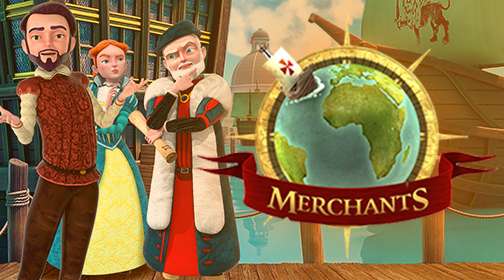
The school chose Merchants, Game Strategies' serious game on negotiation and conflict resolution, and built it into its business course. Students travel back to Renaissance Venice and must face hard-nosed negotiators to become the best merchant of their era.
The heart of the game is its simulator: 6 'real' negotiations in which students have to listen to the other side, identify their interests, earn their trust and close a win-win deal. You learn by doing, not by taking notes.
Teachers also liked how well it fit the classroom. The game is split into 45-minute blocks that match a class period, follows the course curriculum and gives nothing away: there are no obvious answers, so students have to think and come up with their own solutions. It also mixes text, audio, images and simulation, so it reaches students who learn in different ways. A clear example of serious games in education that work in practice, not just on paper.
The games they played
In their own words
I liked Merchants because it is complex. The options in other games are either very little or fairly obvious, but Merchants has many different options. And that makes it seem much closer to real life.
It is important to not only learn the theory but also practice and implement the learning. We learn by doing. You cannot be alone in the theoretical world, sitting down reading and taking notes.
We have to provide learning opportunities that match the realities of living in the twenty-first century. Products like the one Game Strategies has interested me because it creates an interaction between the student and the learning material.
The results
Merchants was a hit with teachers and students alike. 81.8% of students said they learned more with the video game than with traditional teaching, 77.2% believe it will help them perform better at work, and 100% find it applicable.
According to the school, the game encouraged students to read the related lessons, gave them direct practice and boosted their engagement with the content. Students highlighted the depth of the content, the impression the game left on them and being able to use the simulator to practice what they had learned. The outcome: more motivated students who became more effective negotiators and are better prepared for their future jobs.
Every number
- 81.8%learn more than with traditional teaching
- 77.2%say Merchants will improve their job performance
- 100%find it applicable
- 86.7%recommend it
- 72.2%completion rate
More case studies
 97.5%rate the games applicable to their course and career
CSU Global brings leadership training to life with Pacific and hits 97.5% applicability
 99%apply the skills learned on the job
Sanitas gets 99% of participants applying new soft skills on the job with game-based learning
 27%lower staff turnover
Sareb cuts staff turnover by 27% and builds its corporate culture with soft skills training
Shall we play?
Tell us what your team needs to practice and, in a personalized demo, we'll show you the solution that will make the biggest impact on your organization.