

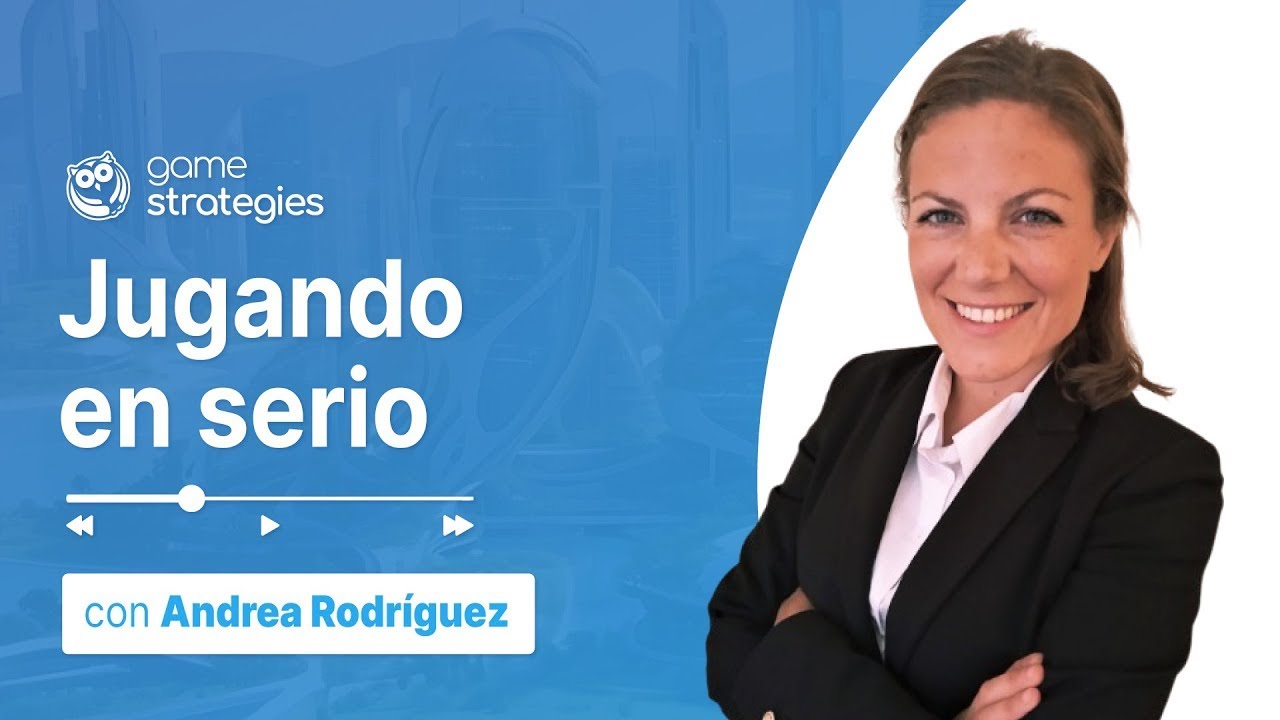
How do you approach talent development in a company of around 24,000 people without training becoming just another empty invitation? In this episode of Jugando en Serio (in Spanish), Rosario López Hidalgo, head of talent development at Alcampo, part of the Auchan Retail group, explains her model: onboarding, talent conversations, programs for different groups, self-learning and plenty of support.
A career built on internal opportunities
López Hidalgo is celebrating 30 years at Alcampo. She joined at 19, when the Torrejón store was opening, to earn some money while studying. She started as a cashier and moved through administration, accounting, personnel management, sales and performance before reaching training, where she has been in charge for eight years, the last two coordinating talent development. For her, it has been like changing companies several times without ever leaving.
That path gives her a unique view of the tasks and behaviors each role requires, and a firm belief: when employees grow, the company grows.
Onboarding that evolves with the business
Alcampo uses, and has customized again, Ada, a Game Strategies onboarding game that works as an editable template. At first they got carried away adding documents, videos and information, and onboarding became too long. They have since tightened the storytelling, swapped text for video and gained efficiency; the colleague who manages it sums it up as «easy, easy». For a manager, that first contact with the vision, mission and values opens a four-to-six-month training plan covering the trade, products, management and leadership.
Retail is alive, and we keep changing and evolving. Our turnover and the number of people joining mean onboarding has to be up to date; something very tedious and time-consuming wouldn't let us be agile.
Penta, a talent development program that works like a puzzle
Penta is a five-month program for managers with five learning tracks, one for each cluster in the company's competency framework. «Our programs are like a puzzle», she explains: pieces that meet different needs and can be swapped to match the pace of the business. The learning path built with Game Strategies lets her choose which games fit leadership, management by objectives or team communication. Almost 60 managers took part in the first edition.
The key to completion is support, because an invitation with nothing behind it falls flat. Every program starts with a kickoff on goals, duration and methods, followed by a participants' chat to answer questions, set priorities and give small shout-outs: «three colleagues have already escaped the island», «you're third on the leaderboard». Without that push, in a five-month plan the learning curve drops and people drift away.
You need support, and a why and a what-for in training, so that it's completed 100%.
Talent conversations and self-learning
Identifying needs starts with talent conversations, a tool shared across the whole workforce. Besides reviewing quantitative data, employees set individual development goals aligned with the strategy and complete a competency self-assessment that their manager then adds to, displayed as a «spider chart» of eight key competencies. That reveals both today's needs and tomorrow's.
For self-learning they launched the Aula del Talento (Talent Classroom): development programs of up to nine months, two-month focused programs, mentoring, cross-mentoring and the Alcampo Learning Cloud platform, open to everyone. The message is clear: raise your hand, say where you want to grow and get training. There are 12 programs for different groups and life stages. For high potentials, Pasarela prepares employees with manager potential, and Avanza, managers with leadership potential.
Why learning through play works
Her first contact with a learning game came in 2015, with Triskelion, on time management, and her reaction was: «what is this?». Today the games are no longer just for managers because, according to López Hidalgo, ratings are exceptional and course completion reaches 100%. Her explanation: you learn without noticing, in a simulator of real situations that you'll face with your team member or colleague as soon as you close your laptop.
At Alcampo, training is part of the company's DNA: last year they logged 443,000 hours, a figure they want to beat every year, because it benefits both people and the company.


