

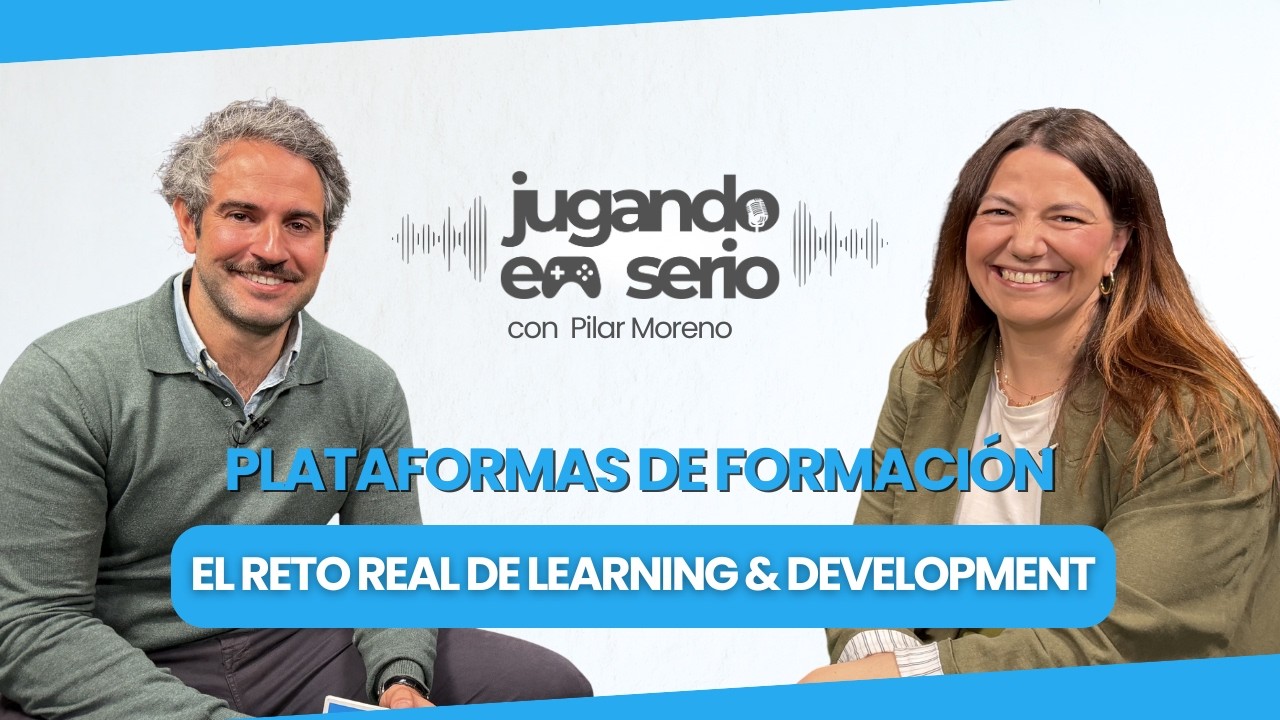
Launching a corporate training platform takes months of work and investment, and on launch day everyone logs in; the trouble starts weeks later, when day-to-day pressure builds. In this episode of Jugando en Serio (in Spanish), Pilar Moreno, head of the training platform at Meliá Hotels International, explains why platforms don't fail for lack of content, but because they don't understand who is on the other side.
What happens after the big launch
At Meliá, the launch was a big event: banners, events, open days at the offices and even an afternoon snack. «It was a huge success», Moreno recalls, «but what comes next?».
The platform went live in 2020 and COVID gave it a boost: with hotels closed, usage soared. When they reopened in the summer, activity plummeted and the team had to make a 180-degree turn, because what had been planned six months earlier no longer worked. The lesson, according to Moreno: don't cling to the original idea, keep your eyes and ears open to see whether the project is working, and stay flexible enough to adapt it when it isn't.
Design for the real user, not the imagined one
The initial focus was on office staff, hotel management and department heads, with a catalog centered on soft skills. But most users turned out to be frontline staff: waiters, receptionists and newcomers to the industry who needed to learn their daily operations.
With around 30,000 users on the platform, according to Moreno, the budget had to be redone. The company backed the change after seeing usage rates during the closure, and a new department director with deep knowledge of hotel operations helped shift the focus. The catalog became mixed, adding operational content while keeping soft skills, with one clear goal: support operations and improve the hotels' NPS.
We were going to do a gradual launch, and within three months we had launched to the whole company. Most of the people on the platform were frontline hotel staff, and we had nothing operational to offer them.
From one-size-fits-all to learning paths by role
For years, Meliá kept what Moreno calls a one-size-fits-all approach: almost all content open, enrollment only in mandatory training, and freedom to find courses or have a manager assign them. The first adjustment was segmenting communications: a new course for housekeeping staff used to go out to the whole workforce, and if you get courses every day that don't interest you, the emails end up in spam.
Content stays open because internal promotion is strong: today's waiter may want to move to reception tomorrow. The next step is for everyone to find a learning path for their role when they log in; they have already started with department academies, such as luxury or F&B.
Microcontent and video for people without a computer
The focus now is covering service basics with operational microcontent and then moving up step by step, because many people with no previous experience have joined the hospitality industry. And access isn't equal: at reception it's easy, but many housekeeping staff don't have a computer. So middle managers are encouraged to use the daily briefing to watch a short module together, for example on how to check that a bed has been properly made.
Their format of choice is video, the one with the most impact in hotels. When choosing providers, Moreno looks at the content but also at the packaging: what experience it creates so nobody drops the course halfway. Another simple improvement with a big effect has been translating into languages such as German, Vietnamese or Thai; today their best users are in Vietnam.
Listening to keep the platform alive
The platform's NPS is essential: if it drops, the team reviews what happened. But the survey field Moreno values most is the blank one, where comments like «it's too long» or «I want to go deeper» appear. Before the latest redesign, they also asked hotel and office staff what they disliked and what they were missing.
Her advice before launching: know your audience and how they need training, define your KPIs beforehand, review the catalog to cover every profile, and listen to your internal customer.
A platform can be like a hotel. You can have a hotel with rooms where people go to sleep, or you can have a hotel that offers experiences. A platform is the same: you can have a platform with courses, or a platform that creates experiences and walks alongside you.


