


More than 5000 satisfied customers worldwide













































Why conflict management training is a manager's job
Conflict that nobody handles never stays between two people. It slows decisions down, wears the team out and usually ends up on the desk of a line manager who was never taught how to defuse it. Good conflict management training gives everyone a way to raise a disagreement before it turns into a crisis, and gives managers the habits of a mediator.
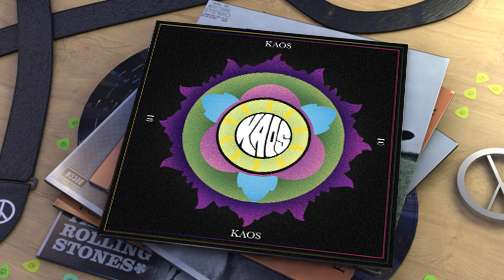
At Game Strategies, you play this training. In KAOS, you manage a rock band that is falling apart a week before the gig of its life: set the ground rules, hear every side, find an agreement and make it last. With Shaka, Iris and Desdemona, you work on what happens before and after the conflict: listening, non-violent communication and trust.
Want to read up before you choose? Have a look at our article on the attitudes to avoid when resolving conflict in the workplace.
The types of workplace conflict your training should cover
Before you pick a course, ask yourself which conflicts you want to tackle. They don't all get solved the same way.
Conflicting goals
Two departments, two priorities, one budget. The disagreement is about substance, and it gets settled with criteria everyone accepts.
Role conflict
Who decides? Who does what? When the boundaries are fuzzy, people end up treading on each other's toes.
Personality clashes
A sharp tone, a comment in a meeting, an email read the wrong way. Here, it's the way people talk that lights the fuse.
Clashing values
Different ideas of fairness, quality or commitment. These are the trickiest, because they touch what matters most to each person.
Conflict during change
A restructure, a new tool, a new team. Uncertainty brings old tensions back to the surface.
Conflict with the manager
Feedback that went down badly, a sense of unfairness, damaged trust. Sometimes the manager isn't the referee but one of the players.
Difficult conversations training with AI Role Play
Knowing the method is one thing. Sitting down with an employee who is upset, or telling two colleagues that their feud has to stop, is another. That's where most conflict resolution courses fall short: one role play in a classroom, once, in front of everyone.
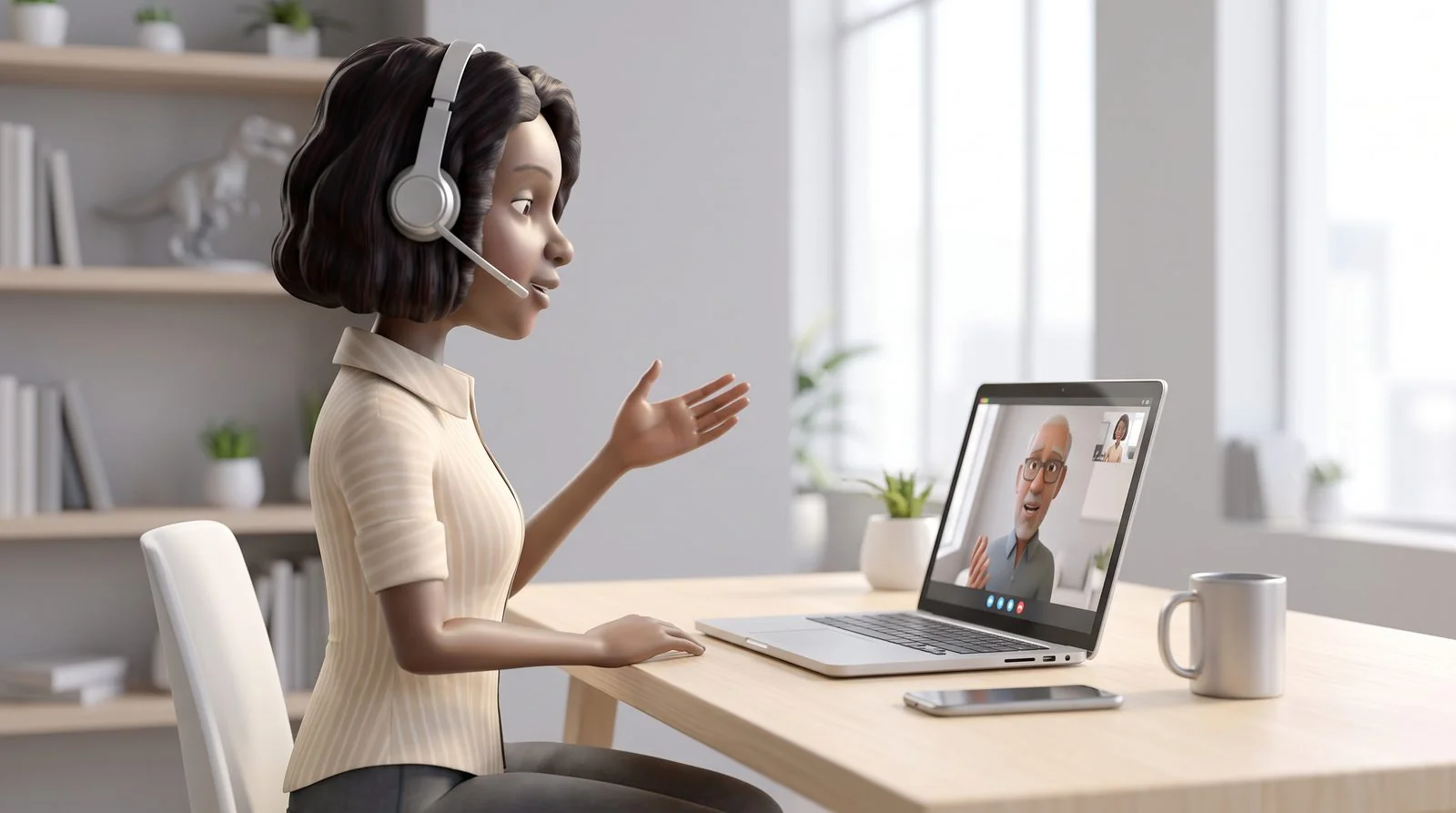
With AI Role Play, your managers talk to an AI avatar by voice, in real time, as if it were the real conversation. You set up the scenario (a performance conversation, a complaint, two team members who won't work together) and they can repeat it as many times as they need. When the conversation ends, they get feedback, and you get reports to track their progress.
The scenarios are the one part we tailor to your organisation. The game-based simulations in the catalogue are the same for every client.
What good conflict management training for managers should include
What it should give you
- A clear method, from the first sign of tension to an agreement
- Active listening, to understand before you reply
- Non-violent communication, to say things without attacking
- The habits of a mediator when two colleagues clash
- Ways to rebuild trust once the crisis is over
- Practice, with feedback on every decision
What makes it useless
- Lots of theory and no practice
- A single one-hour role play, never repeated
- Cases that have nothing to do with the team's day-to-day
- No follow-up once the course is over
Who it's for
- Line managers and team leaders
- Middle managers and HR
- Project and cross-functional teams
- Anyone who works in a team
A sample programme: 4 stages, 4 simulations
A little over five hours of play in total, spread over a few weeks. Short on time? Start with KAOS.
Really listening, even under pressure
In Shaka, a young police cadet in Sydney gets caught up in a hold-up, and everything depends on how well he listens. You learn to focus your attention, show the other person you're listening and keep listening when a confrontation breaks out. About 90 minutes.

Saying it without hurting
In Iris, three friends could lose their project because of the way they talk to each other. You apply non-violent communication step by step: observe the facts without judging, recognise your feelings, identify your needs and make clear requests. About 90 minutes.

Stepping in as mediator
In KAOS, you manage a rock band on the verge of splitting up. You set the ground rules, listen to every side, find a shared solution, get everyone's commitment and spot what could trigger the next conflict. About 45 minutes.
Restoring trust
In Desdemona, a team of technicians on a wind farm project in Patagonia watches trust crumble. You find out which behaviours build trust and which wear it down, and how to restore it once it's broken. About 90 minutes.

Why practise conflict management in a simulation
Get it wrong safely
Raise your voice, interrupt, decide too fast: in the game, mistakes cost nobody anything, and they teach you a lot.
Feedback on every decision
You find out straight away what calmed things down, what made them worse and where to improve.
Self-paced, on any screen
Computer, tablet or phone: everyone plays when they can, without blocking a whole day in the team's diary.
Rankings, levels and badges
Gamification makes people want to finish. And training that gets finished is training that has a chance of changing how people work.
How your conflict management training rolls out
- Before1
Set the goal
With your Customer Success Manager, you choose the audiences, the games and the order of the programme, and decide how to measure progress.
- Launch2
Plug it in wherever you like
On our campus or in your LMS (integration or hybrid SCORM), with single sign-on or a QR code. Nothing to install.
- During3
Your teams play
Online and at their own pace. Languages vary by game, up to 20 across the catalogue.
- After4
Measure
The Admin module gives you reports based on the Kirkpatrick model, and every participant gets a certificate.
In their own words
Feedback on Pacific, our team management game, which has a full module on resolving conflict.
The feedback has been tremendously positive. Our staff at Packt really loved Pacific. It sparked their interest, and they were able to play the game at their own pace, resolving conflicts and delegating tasks practically.
You drive. Your CSM navigates.
Every project has a Customer Success Manager (CSM) who knows it inside out. They work with you to connect the goal you started with, what happens during the project and the results you get.
We don't just track progress. We help you decide what to do with what we learn.
Alwayswith a CSM by your side
StartYour goal
FinishYour results
Defines success with you
What you want to achieve, what should change and how we'll know it's happening.
Gets your team on board
Works with you to reach the participation you need and drive results.
Measures what's changing
Participation, progress, applicability and results. And, where the project allows, how your team is evolving.
Spots where to act
Flags risks before they put the result at stake, and opportunities to improve it.
Turns results into decisions
What we've achieved, what we've learned and what the next step should be.
One more lap: every review ends in a decision (keep going, improve or take the next step), always with someone who already knows your project.
Conflict management training FAQ
How long does conflict management training take?
KAOS takes about 45 minutes. The full programme shown here (Shaka, Iris, KAOS and Desdemona) adds up to a little over five hours of play, which your teams spread over a few weeks at their own pace. AI Role Play sessions are short and can be repeated as often as needed.
Is the training online or face to face?
Online. Our simulations run on computer, tablet or phone, and AI Role Play runs in the browser. We don't run classroom sessions: if you want a group session, your trainers or HR team can hold a debrief after the programme.
Can managers practise a specific difficult conversation?
Yes, with AI Role Play. You set up the scenario (who the other person is, what the conflict is about, what the manager should achieve) and the manager has the conversation by voice with an AI avatar, then gets feedback when it ends.
Which languages are the games available in?
The catalogue covers up to 20 languages, depending on the game. For this programme: KAOS is available in English, Spanish and French, Iris in four languages, Desdemona in seven and Shaka in ten.
Can we run it in our LMS?
Yes. The games plug into your LMS (integration or hybrid SCORM) or run from our campus, with single sign-on. You can track the progress of each person and each group.
Can you adapt the games to our own situations?
The games in the catalogue are the same for all our clients: we don't build custom games. Your CSM helps you choose the games and the order that fit your challenges. To practise conversations specific to your organisation, AI Role Play lets you set up your own scenarios.
How do we measure whether it worked?
The Admin module offers reports based on the Kirkpatrick model, from participant satisfaction to business impact. Your CSM helps you link that data back to the goal you set at the start.


Shall we take the heat out of it together?
Tell us which tensions are holding your teams back. In a personalised demo we'll show you which games in the catalogue train them, how AI Role Play works for difficult conversations and how to roll it all out.