

What's inside
- 01Introduction
What gamification is, what it isn't and why it went from buzzword to business tool.
- 02Why gamify your company?
Six benefits: engagement, making boring tasks fun, feedback, loyalty, productivity and digital transformation.
- 03The secret of effective gamification
The five psychological drives that really hook people, and the example of LinkedIn's profile levels.
- 04Business examples: SAP and Nike+
A car race to energize sales and an app that built a community of runners.
- 05Talent attraction: PwC
Multipoly, the game that turned a careers page into an experience people stayed for.
- 06Hiring: La Poste
A day-in-the-life simulator to spot who really fits the job.
- 07Onboarding: Gamelearn
ADA, the post-apocalyptic video game used to bring nearly 100 people on board in a few months.
- 08Performance and pay: LiveOps
Points and leaderboards to assess and reward more than 30,000 phone agents.
- 09Compliance: Google
Travel Points, a way to make people follow the travel policy because they want to.
- 10Gamify your LMS: Deloitte
Badges and leaderboards so senior executives don't drop out of the Leadership Academy.
- 11Product training: Coca-Cola
Fit for the future, a serious game to bust myths about its drinks.
- 12Soft skills: Bombardier
Triskelion, a time management video game for 170 employees.
- 13Conclusion
The myths that hold gamification back and the four conditions for making it work.
What is gamification in HR, and why does it work?
Gamification means using game mechanics (points, levels, leaderboards, badges, stories, suspense) in something that isn't a game: a hiring process, an onboarding program, a compliance course. The goal isn't to play for the sake of it. It's to change behavior, which is exactly what HR does every day.
The guide starts from a serious problem: according to the 2017 Gallup report it cites, only 13% of workers were engaged with their company. Less engagement means lower productivity, a worse climate and half-finished courses. Gamification tackles that with six benefits: engagement, making boring tasks fun, instant feedback, customer loyalty, higher productivity and data for digital transformation.
Before getting into HR, the guide warms up with two classics. SAP turned its sales software into a car race, SAP Race to 100 Series, where each car was a region. And Nike+ grew from 500,000 members in 2007 to more than 11 million in 2013 with challenges, badges and leaderboards among runners.
The secret: 75% psychology, 25% technology
The most common mistake is to set up points, a leaderboard and a progress bar and expect magic. The guide compares it to opening a Facebook page and thinking you have a social media strategy. What hooks people isn't the tool, it's the drive it triggers.
LinkedIn is the easy example: its profile levels, from beginner to all-star, appeal to progress and status, and got people to fill in far more information. So first decide what you want to spark in people, then pick the story, levels or badges. These are the five drives the guide considers key:
- Rewards: prizes, virtual coins, extra lives.
- Progress: levels and stages that bring you closer to the goal.
- Competition: especially when you know your rivals.
- Recognition: being able to show off what you've achieved.
- Fun: simply having a good time.
Gamification is 75% psychology and 25% technology.
HR gamification examples, from talent attraction to compliance
The guide walks through the employee lifecycle with a real case at each stage. For talent attraction, PwC had a careers page that candidates left within minutes. It created Multipoly, a game with financial challenges and everyday problems at the firm: candidates spent up to 90 minutes playing, versus under ten on the website, and according to PwC, applications rose by 190%.
For hiring, La Poste, the French postal service, was losing 25% of its new hires. Its training center, Formaposte, built a simulator of the day-to-day job, and within a few months failed hires dropped to 8%. For onboarding, Gamelearn (now Game Strategies) had to bring in nearly 100 people over a few months in 2017. Its answer was ADA, a post-apocalyptic video game where you learn the travel policy while escaping robotic bees.
For performance and pay, LiveOps, with more than 30,000 phone agents, awards points for calls, skills shown and courses completed; top performers are more likely to get more work. And for compliance, Google launched Travel Points, rewarding employees who booked flights and hotels below the company's set price. With a leaderboard visible to all, it cut its travel spend within six months.
Gamification in training: fewer dropouts, more practice
Training is where gamification plays at home. The guide credits it with four advantages: interactive learning, learning by doing with simulators, more motivation and global reach without travel. It also points to the big hole in traditional e-learning: only 25% of people who start an online course finish it.
Deloitte gamified its Leadership Academy with points, badges and leaderboards for time-poor senior executives. In three months, it cut the number of executives dropping out by 50% and increased daily returning users by 47%. Coca-Cola, for its part, commissioned Fit for the future, a serious game where employees defend a colony from false information about its drinks: what nobody used to read in leaflets became a daily topic of conversation.
And for soft skills, Bombardier chose Triskelion, Gamelearn's time management video game, with a powerful simulator. 170 employees played it, and 92% say they apply what they learned in their jobs.
How to start gamifying without crashing
The guide, from 2018, doesn't promise miracles. First it busts the myths that hold many companies back: that it takes a huge investment, that it only works with young men, or that your company is too serious to play. According to the numbers it cites, games succeed with women and older people too, and even the most serious companies have got excellent results.
Then it asks for time and commitment. For a gamified program to work, it needs:
- To be aligned with company goals.
- A good communication campaign.
- Real support from leadership.
- A design that appeals to your people's psychological drives.
FAQ
What is gamification in HR?
It's applying game mechanics (points, levels, leaderboards, badges, stories) to HR processes such as talent attraction, hiring, onboarding, performance reviews or compliance, to boost motivation and change behavior.
Which HR gamification examples does the guide include?
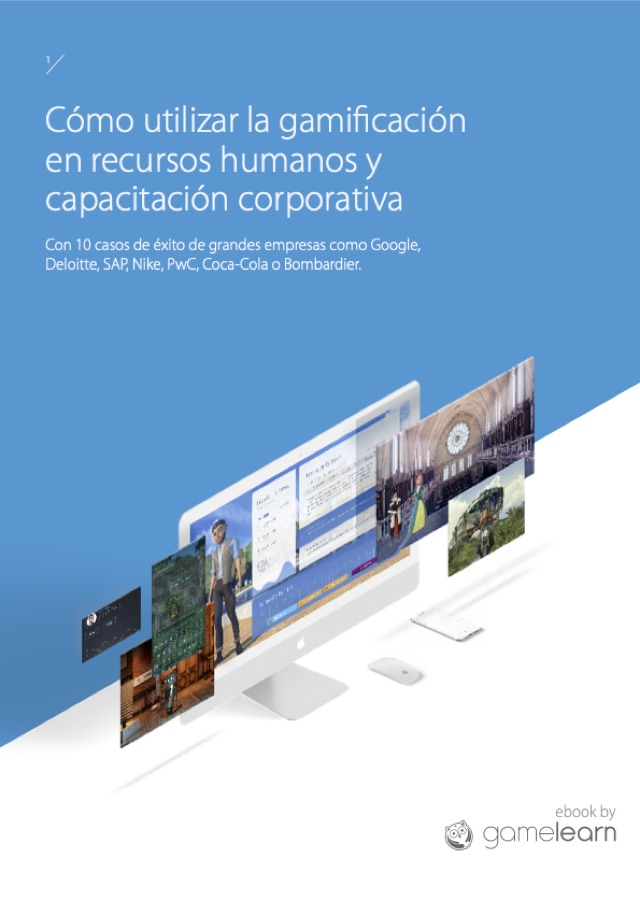
Ten real cases: SAP, Nike+, PwC, La Poste, Gamelearn with ADA, LiveOps, Google, Deloitte, Coca-Cola and Bombardier. Each one explains the problem, the game or mechanic they used and what they achieved.
Are points and leaderboards enough?
No. For the guide, gamification is mostly psychology: first decide which drive you want to trigger (reward, progress, competition, recognition or fun), then choose the mechanics that spark it.
Does gamification work for training too?
It's where it has been used the most. It tackles online course dropout and lets people learn by doing with simulators. Deloitte, Coca-Cola and Bombardier are the guide's three training examples.
Is the guide available in English?
No, the full guide (30 pages) is only available in Spanish. This page covers its key ideas and all ten cases in English, and the PDF download is free.