

What's inside
- 01What is an onboarding process?
Its three goals and its four stages: pre-onboarding, day one, week one and ongoing onboarding.
- 02The Welcome Book
What an employee welcome book is for and the eight goals it should meet.
- 03How to put a welcome book together
The basic structure, section by section: from company history to payroll, holidays and internal channels.
- 04Gamify your onboarding
How an onboarding video game (the guide uses ADA as its example) turns the welcome into an adventure.
- 05How to build your Welcome Book into the game
Four steps: upload documents, write questions, spread them across turns and test your version with a pilot group.
- 06Tips to get the most out of your Welcome Book
Formats, lengths, challenges that get people moving around the office and a launch plan with teasers, rankings and reminders.
Why employee onboarding gamification works
Good onboarding has three jobs: make new people feel at home in their first days, get them productive fast and convince them to stay. No pressure. The trouble is that many companies bet everything on a welcome book that gets skimmed (if it gets read at all).
This guide from Game Strategies (formerly Gamelearn) suggests a different route: organise your welcome book properly, then turn it into a video game. New hires learn the company’s history, values and culture while they beat challenges. What used to be paperwork becomes an adventure they want to finish.
Heads up: gamification isn’t sticking points on a PDF. The guide shows you how to pace the content, how to check it has landed and how long the experience should last.
The four stages of onboarding that works
Onboarding doesn’t start on day one, and it doesn’t end on Friday. The guide treats it as a full plan that releases information in doses, depending on where each person is:
- Pre-onboarding: at interview stage you share culture, hours and rules; between the “yes” and the first day (“Yes to Desk”) you send the paperwork and the welcome book.
- Day one: cover their practical, logistical and human needs. This is the day to make a great first impression.
- Week one: help them understand how their department works, know their goals, start working on their own and build relationships.
- Ongoing onboarding: it can last months and goes deeper into the business model and the industry.
What goes in an employee welcome book
A welcome book answers four questions: who we are, what we’re like, what we do and how we do it. Beyond saying hello, it sums up the culture, shows the org chart, explains the terms of employment and cuts training time without overloading the team doing the welcoming.
The guide suggests a basic structure in four blocks. The PDF has the full checklist, section by section, so nothing slips through:
- A welcome message from the CEO or managing director.
- The company: history, achievements, mission, vision and values, culture, org chart, directory, and quality, CSR and equal-opportunity policies.
- Practical information: health and safety, internal rules, payroll, working hours, holidays, talent management and employee benefits.
- Other useful information: internal communication channels, IT tools, social media guidelines, events and volunteering.
From PDF to video game: plugging in your welcome book
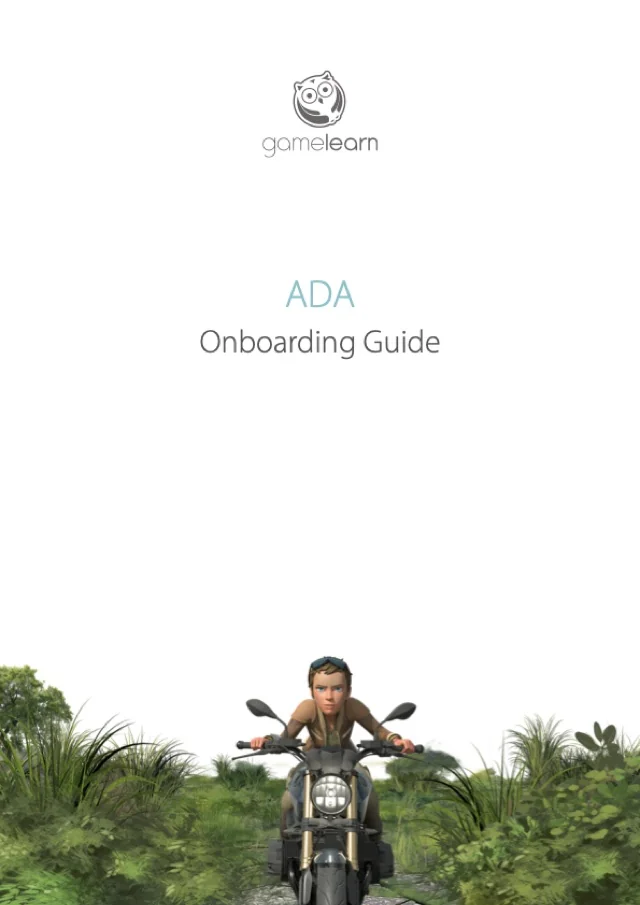
The guide uses ADA, Gamelearn’s onboarding video game (today, Game Strategies Onboarding), as its example. The new hire travels to the year 2127 to save humanity, and what they know about your company is what moves them forward. The method comes down to four steps:
You can also create different versions depending on each new hire’s department, level or business unit.
- Upload your documents: PDFs, images, videos, audio files or YouTube and Vimeo links, which play inside the game.
- Add 1 to 5 questions per document, each with 3 or 4 answer options, to check it has been understood.
- Assign each document to a turn: there are 25, with up to 4 documents in each. Better to split content up than leave turns empty.
- Test it with a pilot group: collect feedback, check the playing time (keep it under 5 hours) and try it on different devices and connections.
Tips to make your gamified onboarding stick
Great content isn’t enough: it has to go down easily. Here are some of the guide’s recommendations:
And don’t forget to sell it: teasers to build buzz, an invitation that makes each person feel important, a launch video and weekly messages featuring the leaderboard and a prize for the top 3. Automatic reminders every 5 days do the rest.
- Pace it: if your welcome book covers 10 topics, break them into subtopics and spread them across different turns.
- Keep it short: documents under 5 pages, presentations of 10 to 15 slides, and videos or audio clips under 4 minutes.
- Open with a welcome message from leadership, which builds trust, then follow with an infographic explaining the game.
- Mix formats: TED talks, podcasts or infographics keep attention up.
- Get people away from the screen: QR codes around the office, or a 10-minute meeting with a “host” who hands over the answer to pass the quiz.
FAQ
What is an employee welcome book?
It’s the company’s welcome manual: a document for new hires that sums up who you are, how you work and what’s expected of each person. It speeds up adaptation, aligns people with company goals and documents the integration process.
What should a welcome book include?
A message from leadership; the company’s history, mission, values and org chart; practical information (payroll, hours, holidays, health and safety, benefits); and other useful details like internal channels and tools. The guide includes the full list.
How long should gamified onboarding take?
The guide recommends keeping the gamified version under 5 hours of play, spread across turns. Onboarding as a whole takes longer: the ongoing phase can last months.
Do I need coding skills to gamify onboarding?
No. In the guide’s example, you upload documents, write questions and assign them to turns from an admin panel.
Which languages is the guide available in?
English, Spanish and French. It’s free, and you can download it without filling in any forms.