


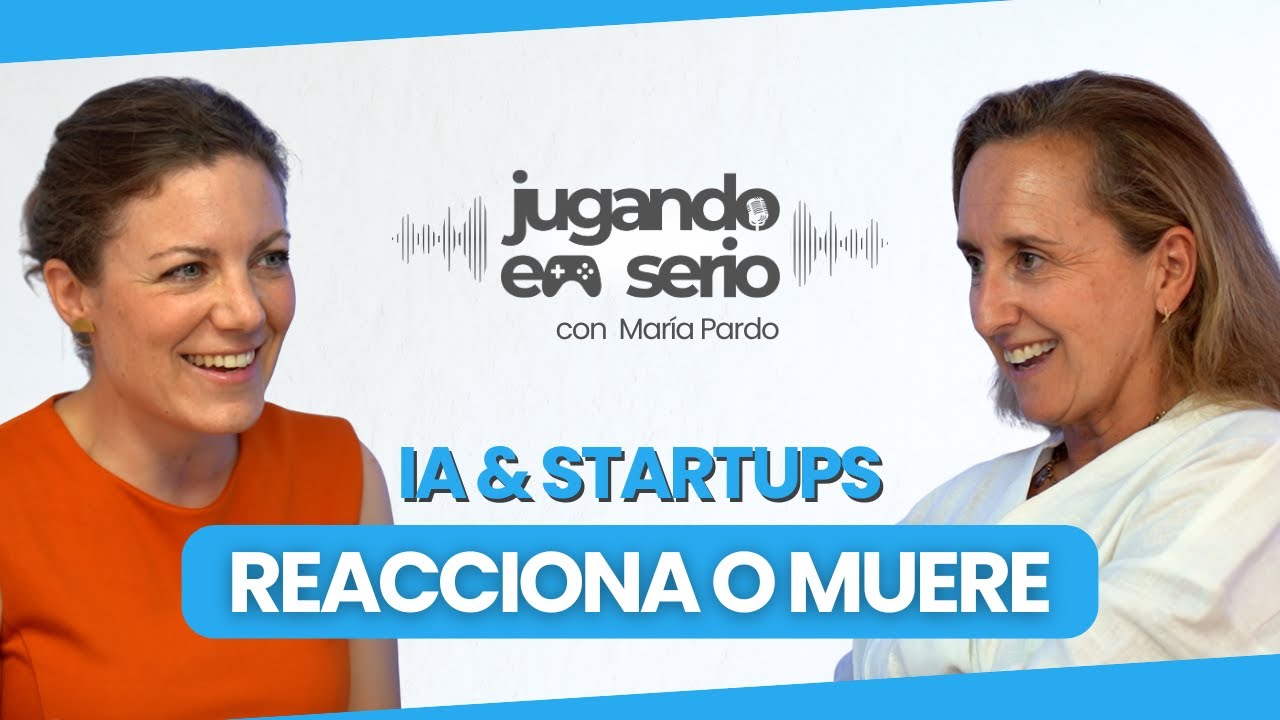
Artificial intelligence is speeding everything up, startups are racing against the clock and teams need more than tools. In this episode of Jugando en Serio (in Spanish), María Pardo, journalist, entrepreneur and sales director at TrustCloud, explains what humanizing technology really means and what she learned founding and selling two startups in the middle of the digital revolution.
From spotting trends to founding two startups
Pardo comes from magazines (she was deputy editor of GQ and editor of Marie Claire), but she always kept one foot in innovation. She became an entrepreneur by making a virtue of necessity and applying what a lifestyle journalist does best: spotting trends. In 2020, with two partners, she saw that there was «nothing» in women's sport and created Women's Sport Institute, which was later bought by a publishing group.
In parallel came We Humans: AI avatars so that any company, however small, could offer good, affordable customer service that wasn't a chatbot. It was bought by a large contact center group, going from a startup of ten or twelve people to part of a 10,000-employee organization.
What humanizing technology means
The premise behind We Humans sums up her view: if we're condemned to talk to a machine, let the machine make the effort to communicate with us and be kinder. For Pardo, humanizing technology means it shouldn't be in charge or dominate us. Used well, it multiplies your potential «to the nth degree».
Technology always has to be a support; it has to add, but it mustn't overshadow or hijack individual talent. It's unstoppable, you have to embrace it and work with it, but only when it makes sense and adds value.
Storytelling: what technology can't do (yet)
With so much on offer, once the basics of price, quality or honesty are covered, you go from a thousand options to ten and then to five. What makes you sign with one company rather than another? According to Pardo, the person behind it: their story, what they bring, what fits you. That storytelling is a brand's differentiator and, at least for now, it's exactly what technology doesn't do.
She also believes in gamified experiences. She remembers the launch of a dive watch in Madrid: they closed off a metro carriage, set up a kind of treasure hunt with an opera singer, and it all ended in a party at a ghost station. Twenty years later, she remembers it far better than any press release with a photo.
Method and details: personalizing without losing efficiency
To personalize without losing efficiency, Pardo argues for creating methods for everything: it's tedious at first, but then it becomes part of the routine. You have to think through the whole cycle, from the idea to pre-sales, sales and after-sales, and put yourself in the customer's shoes, like a mystery shopper: where am I failing? Why did it take me seven days to reply?
And take care of the details, because that's where the difference lies: how you communicate, how you welcome people, how you present a proposal. She even recommends writing a kind of manifesto of what you want to be, to come back to when day-to-day work swallows you up.
You want to sell A, but the market buys B. Fine, let it buy B, but at least you had a plan. What's non-negotiable is jumping in, as people say now, organically, to see what happens.
Building at the speed of AI, without fear
Technology waits for no one: at We Humans, the avatars' intelligence had to be rethought every week. Embrace it too early and it may lead nowhere; arrive late and others will have overtaken you. That's why she insists on closing versions: launch a minimum viable product, sell it and improve it a hundred times afterwards.
She talks about success without filters: selling a startup can leave a bittersweet taste, and sometimes you're left without a job. Her challenge today is to keep all her projects going without sacrificing her health or private life. And the advice she'd give her younger self: don't be afraid, because starting a business is easier than you think.


