

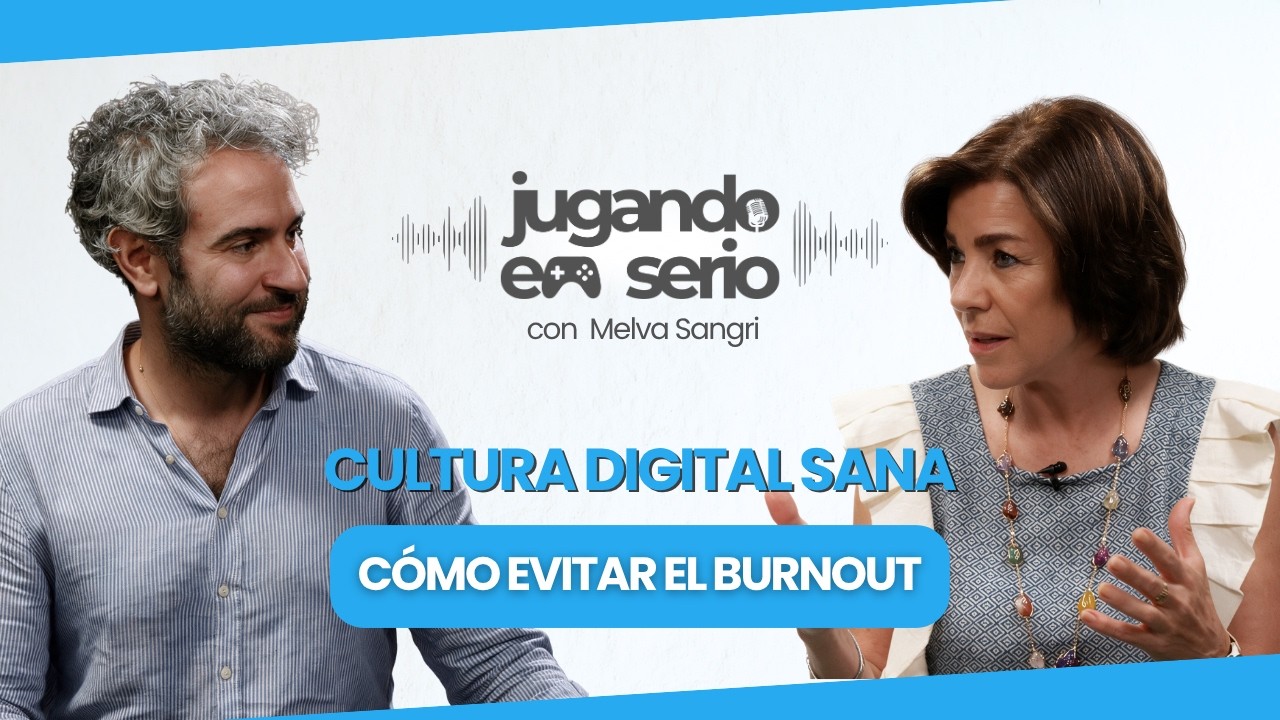
Emails at 11 p.m., back-to-back meetings and a phone buzzing every two minutes. Many companies mistake it for commitment, but it's the fast track to burnout. In this episode of Jugando en Serio (in Spanish), Melva Sangri, executive coach and cultural transformation facilitator at SBS Facilitadores, our partner in Mexico, explains how to build a healthy digital culture without giving up on technology.
The workday that never ends
Melva brings up a concept Microsoft popularized after the pandemic: the «infinite workday». At the office, the day had a fairly clear end. With remote work and communication tools, those boundaries disappeared and notifications started arriving at all hours.
The problem isn't just fatigue. Constant interruptions destroy focus, raise stress and reduce our ability to think. Worse still, in many companies hyperconnectivity isn't just tolerated, it's rewarded. The leader who replies instantly looks like the most productive one.
What you allow, you promote. And we're allowing people to demand answers at hours that belong to someone's time at home. We're actually promoting a culture that creates a huge amount of stress.
Bans don't work: agreements do
Asked whether the answer is forced disconnection, Melva is clear: no. Wellbeing campaigns, mindfulness courses and posters change nothing if the boss keeps sending emails at midnight and expecting a reply. Culture changes through example.
Her proposal is digital agreements. First, make the invisible culture visible: what are we rewarding and what are we allowing? Then agree as a team when a reply is needed outside working hours, what is truly urgent and how many meetings are actually necessary. Because sitting in two meetings at once isn't productivity: it's a distracted brain.
From FOMO to a culture of fear
The fear of missing out, FOMO, lives in the office too. In cultures with heavy control and micromanagement, watching every notification is a way to protect yourself: from not looking committed, from being overlooked. For Melva, that describes a culture of fear, and a culture of fear is reactive, not creative.
The bill comes from two directions. For the individual, it's physical and mental health. For the company, it's talent leaving, because not everyone wants to earn recognition by being online 24/7.
Companies spend a lot of money on courses in creativity, curiosity and design thinking, but they don't go to the root: let people have emotional and mental wellbeing so they can be more creative, because we're all inherently creative.
Warning signs and a real case
How do you know your digital culture isn't healthy? The signs seem invisible, but they show up in results: leaders making more mistakes, less creative teams, little psychological safety, greater exposure to cyberattacks and short-term thinking.
Melva shares the story of a plastic film manufacturer that, after the pandemic, filled its operations with platforms, apps and controls, convinced its teams already had a digital mindset. It neglected its people, and talent loss, exhausted teams and conflict followed. By her account, productivity fell by 40% and only recovered once the company cut meetings and control processes and set digital agreements with its teams.
Where to start: from FOMO to JOMO
To win over a skeptical leadership team, Melva doesn't talk about wellbeing but about results: a focused team that thinks, innovates and protects the brand. She recalls the line attributed to Peter Drucker: culture eats strategy for breakfast. The first steps are to review the behaviors everyone accepts, build agreements and track them with regular checkpoints. And she reminds leaders that words push, but example pulls.
On a personal level, she suggests swapping FOMO for JOMO, the joy of missing out: keep the phone out of the bedroom at night, bring back walks, conversations or a quiet coffee. It's not about rejecting technology but using it with balance, like walking the Camino de Santiago with an app to find the next hostel, without being glued to the screen.


