

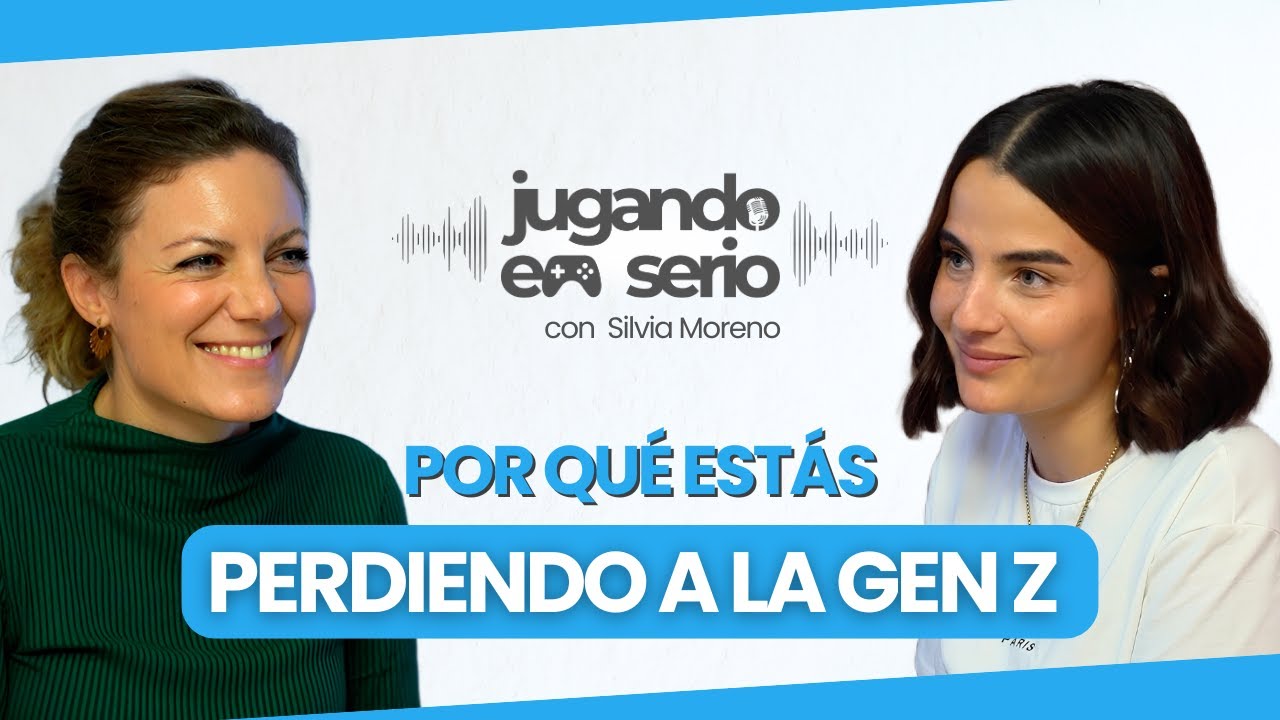
Many business owners believe Gen Z doesn't want to work, can't take the pressure and quits without being pushed. In this episode of Jugando en Serio (in Spanish), Silvia Moreno, an organizational wellbeing and cultural transformation expert, debunks that myth and explains what Gen Z in the workplace really needs in order to stay: purpose, coherence and a healthy culture.
Work shouldn't hurt
Moreno comes from organizational wellbeing and wants to turn companies where work hurts into places where people feel they belong and enjoy their work. Other generations learned to put up with it: «work is work», «you're not here to make friends». But work is people, who bring their experiences with them and spend more hours there than with their families.
It's also measurable: happy people perform better and get better results. Three and even four generations now work side by side, and for Moreno the fight for wellbeing led by Gen Z should be embraced by everyone, because it's a common good.
Purpose: what really drives Gen Z
If earlier generations defined themselves by their salary band, Gen Z, once the basics are covered (access to housing, quality education), is driven by purpose: whatever they do, they want to know what it's for. They look for work that nourishes them and that they can contribute to, colleagues to connect with, and coherence.
The myth that they lack commitment doesn't hold up: look at how they've mobilized in protests in several countries, or how thousands of young people rolled up their sleeves after the DANA floods. If there's a reason why, they work as hard as anyone. As digital natives, they get involved in social and environmental causes because it's the world they'll inherit.
Moreno saw it while leading a team: at six o'clock the youngest simply said goodbye while the rest stayed on a bit. They ended up laughing about it: «They're overtaking us».
An onboarding that supports people, not an endless PDF
Some welcomes still boil down to picking up a laptop and sitting down. If Gen Z needs a reason why, that's the first thing to give them. When Moreno led teams, she asked every newcomer how she could help: people arrive with doubts, fears and perhaps a bad previous experience.
Forget 200-page compliance PDFs, too: nobody will read them. A generation with information at its fingertips learns what interests it, in formats that engage: «make me a video, gamify it». That's employer branding too: the best marketing is current and former employees speaking well of the company.
Make that person feel comfortable in your onboarding. Give them a purpose, a reason why. You can even support them with a mentor who is a peer: not a boss, not a senior, someone who has been through what that person is going through now.
Ongoing feedback, and dismissals that don't feel like betrayal
Most of us, Moreno admits, find it much easier to point out the bad than the good. And feedback comes too late: if you see something to improve, don't wait eight months for the performance review, or fire the person outright. Sit down and say: «I've seen this, shall we look at it together?». For Gen Z, finding out why you're being let go at the dismissal itself is a betrayal: working relationships are relationships.
And if someone has to leave, don't dump it on HR: the manager, who is part of their day-to-day, should handle it with respect and closeness. Some companies even help open other doors: «you're fired» is a far cry from «I'm here for you».
Culture or talent drain: a warning for CEOs
When turnover soars, it's easy to blame «the kids». But Gen Z looks for purpose and culture, and feels the company represents them: Moreno recalls how a friend took it personally when her company rejected a candidate for being pregnant. If young people won't join, your workforce ages and, between departures and retirements, your company has no future within seven to ten years.
How do you convince a hard-nosed executive? With data and money: happy teams produce more, and that shows in the financial results. Her advice for this week: sit down with someone on your team and ask how they are, how you can help and what they need to reach their full potential.
The ultimate lever is communication: sitting down and listening, almost more than talking. Listening to the person next to you will give you the key to everything.


