


In this article
When David Kolb comes up in corporate training conversations, people almost always think of learning styles: converging, diverging, assimilating, accommodating. But before those styles, Kolb proposed something different, and for anyone designing training, far more useful: a 4-phase cycle that explains how knowledge is actually built from experience. That cycle is the real core of his theory, and it's what determines whether a training program stays theoretical or turns into real behavior change.
What the Kolb cycle is
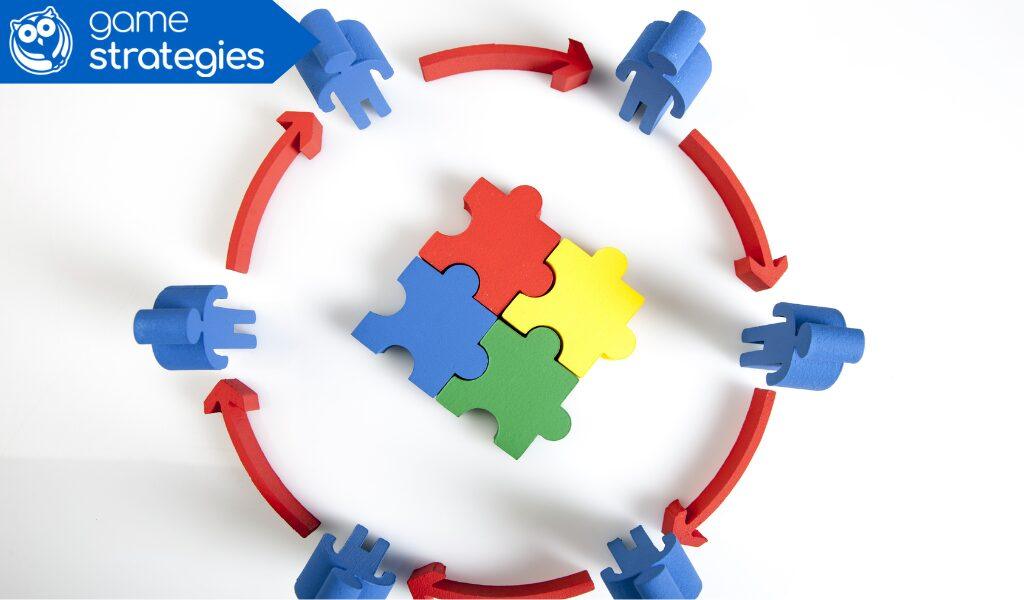
In 1984, in his book Experiential Learning: Experience as the Source of Learning and Development, David Kolb proposed that learning doesn't happen in a single step. It happens in a continuous 4-phase cycle that feeds back into itself. Each phase depends on the one before it, and skipping any one of them is, according to his model, the main reason so many training processes fail to make learning stick.
The 4 phases of the experiential learning cycle
-
Concrete experience
The cycle starts with a real, direct experience: facing a situation, working through a case, making a decision that has consequences. It's not reading about the situation or watching a video of it, it's living it. In corporate training, this translates into simulations, practical cases, or role-play exercises, not lecture-style content.
-
Reflective observation
After the experience, people need space to think about what happened: what worked, what didn't, and why. This phase gets skipped constantly because it feels like "wasted time," but it's exactly where the experience starts turning into learning.
-
Abstract conceptualization
Once the reflection is done, people connect what they lived through to a theoretical framework or general principle, a rule, a model, a best practice that explains why things happened the way they did. This is where the more "classic" part of training fits, the theoretical content. But it only makes sense after the experience and the reflection, not before.
-
Active experimentation
Finally, people test that new understanding in a new situation, adjusting their behavior based on what they've learned. This phase feeds directly into the start of the next cycle, with a new concrete experience. That's how learning becomes an ongoing process instead of a one-off event.
Why most training falls short
Most corporate training programs start directly at phase 3, abstract conceptualization: a slide deck, a manual, a talk that explains the theory before people have lived through any related experience. The result is learning that sounds coherent in the room but has no concrete experience to anchor to, which is exactly why it's forgotten so easily.
Designing training around the full cycle means reversing the usual order: experience first (even if simulated), then guided reflection, then the theory that puts a name to what's already been lived, and finally a new chance to put it into practice.
How to apply the Kolb cycle to training design
- Start with an experience, not a slide. Design a case, a simulation, or a practical challenge as the starting point, before explaining the theory.
- Set aside real time for reflection. A guided debrief with specific questions about what happened shouldn't get cut for lack of time. It's the phase that consolidates learning.
- Introduce the theoretical framework after, not before. Theory clicks when it explains something people have already lived through and already reflected on.
- Close the loop with new practice. Give people the chance to apply what they've learned in a different scenario, to check whether the behavior change actually took hold.
The connection to gamification
A well-designed training video game walks the Kolb cycle naturally: the player lives through a situation inside the game (concrete experience), gets feedback on their decisions (reflective observation), connects that feedback to a principle or model (abstract conceptualization), and faces a new challenge to apply what they've learned (active experimentation). That's why gamification isn't just a motivation layer bolted onto training, when it's built well, it's a way of walking the full Kolb cycle from start to finish.
If you want to go deeper into how each person moves through this cycle depending on their dominant style, converging, diverging, assimilating, or accommodating, you can check out our guide to personalised learning journeys.
[NOTA: no hay todavía un artículo EN equivalente a "¿Qué son los estilos de aprendizaje?" (solo existe en ES), así que enlacé en su lugar a "Learning landscapes", que también toca estilos de aprendizaje y personalización. En cuanto exista la versión EN de ese artículo, cambia el link.]
Conclusion
The Kolb cycle isn't just academic theory, it's a practical checklist for designing training: Is there a real experience at the start? Is there space to reflect on it? Does the theory come after, not before? Is there a second chance to apply what's been learned? A program that answers yes to all four questions is far more likely to drive real behavior change than one that only delivers content.
Want to design your next training program around a learning cycle that actually works? Request a Game Strategies demo and we'll show you how we apply it in our training video games.
Frequently asked questions
What are the 4 phases of the Kolb cycle?
Concrete experience, reflective observation, abstract conceptualization, and active experimentation. The 4 phases feed into each other in a continuous cycle, not a single linear process.
What's the difference between the Kolb cycle and Kolb's learning styles?
The cycle describes the universal process by which learning is built through experience. The styles (converging, diverging, assimilating, accommodating) describe which phase of the cycle each person tends to feel most comfortable in.
Why do so many training programs not work according to Kolb's model?
Because they start directly with theory (abstract conceptualization) without going through a real experience or a space for reflection first, which prevents the learning from sticking.
How does the Kolb cycle apply to gamification?
A well-designed training video game walks through the 4 phases naturally: the player lives through a situation, gets feedback, connects it to a principle, and faces a new challenge to apply it.